Agentic Strategy Report • Updated SEP 2026
01 / 12
Industry Insight
The Agent Team
Opportunity for
Human Brands.

60-second read
54%
better conversion from AI-referred shoppers than non-AI traffic, US retail, May 2026
Adobe Analytics, June 2026 release
The buying path moved to AI-mediated discovery faster than lean brand teams can re-tool for it, and the operating model built for the new path, a coordinated team of specialized agents under human approval, is still rare enough to be an advantage.
Recommendation. Run the brand on an agent team: named disciplines for site conversion, lifecycle, storefront, launches, and paid media, each grounded in deep brand knowledge, each drafting on a cadence, with every artifact waiting for your approval before it ships.
01 · THE MARKET MOMENT
The Market Moved First
The demand side of the shift is already in the data: the AI-referred shopper is the best-converting visitor in retail, and the rails carrying that shopper hardened into standards this year.
The 60-second read.
- AI-referred retail traffic more than doubled in a year. Adobe measured 138 percent year-over-year growth in May 2026, and 1,324 percent growth since tracking began in October 2024.
- The conversion gap flipped. AI-referred visitors converted 54 percent better than non-AI traffic in May 2026; a year earlier they converted at roughly half the non-AI rate.
- The platforms confirm it. Shopify's own Q1 2026 data shows AI-driven traffic to its stores up 8x year over year, orders from AI searches up nearly 13x, and new buyers ordering through AI channels at close to twice the rate of other channels.
- The transaction went home to the merchant. OpenAI wound down Instant Checkout in March 2026 after Walmart reported in-chat purchases converting at one-third the rate of its own site. Discovery lives in the assistant; the sale closes on your store.
- The rails are now a standard. Google launched the Universal Commerce Protocol in January 2026 with Shopify, Etsy, Wayfair, Target, and Walmart as co-developers, and Ulta Beauty went live on it in April.
The detail behind each of those lines follows.
Adobe's May 2026 data, drawn from more than one trillion visits to US retail sites, shows AI-referred traffic up 138 percent year over year and up 1,324 percent since October 2024, when the company began tracking the channel. The engagement quality moved with the volume: AI-referred shoppers convert 54 percent better than non-AI traffic, generate 53 percent more revenue per visit, spend 53 percent more time on site, and view 23 percent more pages. Twelve months earlier, the same channel converted at roughly half the rate of ordinary traffic. The reversal took one year, and the platform data agrees with the panel data: Shopify's Q1 2026 numbers show AI-driven traffic to its merchants up 8x year over year and orders from AI searches up nearly 13x.
AI-referred versus non-AI retail traffic, May 2026.
Four engagement measures, all favoring the AI-referred visitor. The channel that converted at half the ordinary rate a year earlier now leads on every measure Adobe tracks. US retail, more than one trillion visits.
Adobe Analytics, June 2026 release
Where the transaction itself lives settled in the first quarter of 2026, and it settled in the brand's favor. OpenAI launched Instant Checkout in September 2025 with the ambition of closing purchases inside ChatGPT; by March 2026 it confirmed the wind-down, refocusing on product discovery while merchants keep their own checkout. The decisive evidence came from Walmart, which put roughly 200,000 products through in-chat checkout and found those purchases converting at one-third the rate of shoppers who clicked through to walmart.com. The pattern that survived is the one operators can build for: the assistant recommends, and the sale closes on the merchant's own store, with the merchant's own pricing, loyalty, and margin intact. The rails under that pattern are now shared infrastructure. Google's Universal Commerce Protocol, launched at NRF in January 2026 and co-developed with Shopify, Etsy, Wayfair, Target, and Walmart, powers agentic checkout across AI Mode in Search and the Gemini app.
The assistant recommends. The sale closes on your store.
The shopper's posture makes brand coherence worth more, not less. Klaviyo's March 2026 study of nearly 8,000 consumers found 60 percent using AI at least weekly and 41 percent having bought an AI-recommended product in the prior six months, while only 13 percent say they completely trust AI. People act on the recommendation and then verify the brand behind it. Every one of those visits lands on a surface the brand controls, and converts or leaks on the strength of what it finds there. Social commerce is compounding on its own rail at the same time: eMarketer forecasts TikTok Shop US GMV at $23.41 billion for 2026, up 48 percent year over year.
- 138%
- year-over-year growth in AI-referred US retail traffic, May 2026
- 54%
- conversion advantage of AI-referred shoppers over non-AI traffic
- 13x
- growth in orders from AI searches on Shopify stores, Q1 2026 year over year
- 41%
- of consumers bought an AI-recommended product in the prior six months
The market moment in four numbers
- INDEX
- 01
- SOURCE
- Adobe Analytics · Shopify Q1 2026 data · Klaviyo AI Persona Research · eMarketer
- DATE
- JUL 2026
02 · THE OPERATING MODEL
From AI Tools to Agent Teams
The supply side of the shift is an operating-model change, and the industry's own numbers say it is moving from experiments to budgets: the model that follows the AI tool is the coordinated agent team.
The 60-second read.
- Adoption is early and uneven, which is the opportunity. McKinsey's latest State of AI survey (fielded mid-2025) found 23 percent of organizations scaling agentic AI in at least one function; Salesforce's marketing-specific number (fielded late 2025) is 13 percent.
- The money has already decided. BCG's January 2026 AI Radar, surveying 2,360 executives, found roughly 90 percent of CEOs expecting measurable ROI from AI agents in 2026, with more than 30 percent of 2026 AI investment committed to agentic systems.
- The frame is shifting from one assistant to many coordinated agents. Gartner recorded a 1,445 percent surge in enterprise inquiries about multi-agent systems between Q1 2024 and Q2 2025, and named multi-agent systems a Top Strategic Technology Trend for 2026.
- The endpoint is delegation, supervised. Gartner's April 2026 prediction: by 2028, more than half of enterprises will move spend from assistive AI to platforms that commit to workflow outcomes, with people supervising the outcomes.
The detail behind each of those lines follows.
An AI tool waits for a prompt and produces an artifact. An agent runs a workflow. An agent team runs an operating model: a set of named, specialized disciplines working the same brand from the same strategy, each reading real state in its own domain (the product pages, the email program, the catalog, the ad spend), each drafting work on a standing cadence, and each answering to the same human owner. The difference between the three is the difference between a better pen, a fast assistant, and a staffed function. What the market is pricing right now, in both vendor launches and analyst forecasts, is the third.
- The surge in enterprise inquiries about multi-agent systems, Q1 2024 to Q2 2025, per Gartner. Multi-agent systems are a named Top Strategic Technology Trend for 2026.
- 1,445%
Gartner · October to December 2025
The adoption data puts the model at the early-majority threshold, and the spread between samples is itself the story. Among organizations already running generative AI in production, Google Cloud's 2025 study found 52 percent had deployed agents. Across the whole economy, McKinsey's number for scaling agentic AI in at least one function is 23 percent. Inside marketing organizations specifically, Salesforce measures agentic adoption at 13 percent, against 75 percent using AI in some form. Read together, the numbers describe a capability that works where it is deployed and has barely reached the function this report is about. That gap is what an early move captures, and the budget data says the move is being made now: BCG's January 2026 survey of 640 CEOs found agentic AI drawing more than 30 percent of 2026 AI investment, with the most committed cohort allocating around 60 percent and deploying agents end to end across whole workflows at twice the average rate.
- 23%
- of organizations are scaling agentic AI in at least one function
- 13%
- of marketing organizations have adopted agentic AI
- 52%
- of gen-AI-in-production enterprises have deployed AI agents
- 30%+
- of 2026 AI investment committed to agentic AI, per surveyed CEOs
Agent adoption, mid-2025 to early 2026, by sample
- INDEX
- 02
- SOURCE
- McKinsey State of AI (fielded mid-2025) · Salesforce State of Marketing (fielded late 2025) · Google Cloud ROI of AI (fielded mid-2025) · BCG AI Radar (fielded late 2025)
- DATE
- JUL 2026
The direction of travel is as well documented as the current position. Gartner's April 2026 research note projects that by 2028, more than half of enterprises will stop paying for assistive AI tools (copilots, smart advisors) in favor of platforms that commit to workflow outcomes, with human roles shifting toward supervising agent output. The same firm expects a third of enterprise software applications to include agentic AI by 2028, up from under 1 percent in 2024. For a growing brand, the practical translation is simple: the operating question is moving from "which AI tools should my team use" to "which parts of the operation should run on agents, and under whose control."
03 · THE CONTROL PATTERN
The Supervised Autonomy Advantage
The version of the agent model that is winning in practice keeps a human owner on every consequential decision, and the evidence for that pattern now spans surveys, forecasts, and one very public reversal.
The 60-second read.
- Boards want the supervised version. In a February to March 2026 survey of 900 CEOs, 51 percent keep humans in the loop for business-critical decisions and 34 percent run an explicit "AI recommends, humans approve" model.
- Confidence in unsupervised scale is falling, while deployment plans hold. The same study found CEO confidence in deploying agents at scale fell from 41 percent to 31 percent year over year, even as 83 percent still plan to deploy.
- Ungoverned autonomy is where projects die. Gartner forecast in June 2025 that more than 40 percent of agentic AI projects would be canceled by end of 2027, naming inadequate risk controls among the leading causes.
- The cautionary tale is named. Klarna replaced the work of hundreds of support staff with an AI assistant in 2024, publicly reversed course in May 2025 after quality suffered on complex cases, and now runs a blended model.
The detail behind each of those lines follows.
The strongest recent evidence comes from the people accountable for the outcomes. Dataiku and The Harris Poll surveyed 900 CEOs of $500 million-plus companies in early 2026: a 51 percent majority keep humans in the loop for business-critical decisions, and a third run the exact pattern this report recommends, AI that recommends while humans approve. The most useful number in the study is the one that moved: confidence in deploying agents at scale fell from 41 percent to 31 percent in a year in which deployment intent held at 83 percent. Executives are learning the difference between autonomy and delegation, and choosing delegation.
The failure data explains why. Gartner's June 2025 forecast, still the most-cited number in the category a year later, put more than 40 percent of agentic AI projects on track for cancellation by the end of 2027, with escalating costs, unclear business value, and inadequate risk controls as the causes. Klarna made the risk concrete: its AI assistant absorbed the workload of roughly 700 agents in early 2024, the company cut support staff deeply, and by May 2025 its CEO said publicly that the cuts went too far and began rehiring people for complex, high-stakes cases. Early experimental work points the same direction; an April 2026 oversight study found that approval-first supervision strategies were associated with lower rates of problematic agent actions in live web environments.
The winning pattern is delegation with judgment: agents that draft, and an owner who approves.
For a brand owner, the pattern translates into an operating contract with three clauses. Every agent's output lands in one review queue and waits. Approval is a human act, every time, on every artifact that touches a customer or moves money. And the agents' scope is drafting and analysis, so the worst case of a bad draft is a rejected draft. Canopy is built on exactly this contract, and the rest of this report describes the model in that supervised form, because that is the form the evidence supports.
04 · THE WORK ITSELF
What an Agent Team Runs
A brand's growth strategy decides which disciplines run for it. Canopy builds the named agents that strategy calls for, drawn from a roster spanning every operating surface of the business, from the product page to the outbound pipeline.
The 60-second read.
- The roster fits the brand's strategy. Canopy's disciplines span seven functional families, storefront and lifecycle through service, acquisition, marketplace, and demand generation, and the team built for a brand is the set its growth plan calls for.
- Specialization is what makes the output usable. A discipline grounded in the brand's own knowledge base drafts in the brand's voice with the brand's claims; a generic assistant drafts generic work.
- The throughput change is measurable today. HubSpot's 2026 State of Marketing found 67 percent of marketing teams saving ten-plus hours a week with AI, and 73 percent of teams now implement campaign changes within days or hours.
- The nearest measured outcomes come from service agents. Salesforce reports Reddit's support agent deflecting 46 percent of cases and cutting resolution time 84 percent; OpenTable resolves about 70 percent of inquiries autonomously. Vendor-reported, and a leading indicator for the same pattern in growth work.
The detail behind each of those lines follows.
An agent team is organized the way a strong growth team is organized: by surface, with named ownership. Which surfaces get a named agent, and how many, is decided function by function against the brand's own strategy. Canopy's own roster is organized into seven functional families: Storefront & Conversion, Lifecycle & Retention, Intelligence & Governance, Service & Support, Acquisition & Growth, Marketplace & Channel, and Demand & Pipeline. Every discipline inside those families reads its own surface on a schedule and on demand, drafts into the same review queue, and gets sharper as the brand's knowledge base and outcome history deepen. A jewelry brand chasing collection conversion runs a different mix from a grooming brand defending Amazon rank and DTC margin at once, and Canopy's setup engagement builds the named agents each mix calls for.
| Family | Discipline | What it reads | What lands for your approval | The outcome it moves |
|---|---|---|---|---|
| Storefront & Conversion | Storefront Suite | Your live product pages, collections, and catalog | A single storefront digest: conversion moves, catalog fixes, collection re-ranks | Page and collection conversion, catalog readiness |
| Lifecycle & Retention | Email & Lifecycle | Your calendar, catalog, and audience segments | Drafted campaigns and flows with proposed segments | Revenue per send, repeat rate |
| Intelligence & Governance | Review Intelligence | Your Yotpo and Okendo review stream, weekly | An emerging-theme and SKU-anomaly brief | Complaint response speed, review-driven catalog signal |
| Service & Support | Customer Service | Your policy knowledge base and live order data | Answered tickets, with anything uncertain escalated and the full transcript attached | Ticket deflection, response consistency |
| Acquisition & Growth | Paid Media Intelligence | Ad spend, platform-attributed value, store revenue of record | A monthly allocation brief: scale, hold, cut, test | Contribution from paid, honest measurement |
| Marketplace & Channel | Cross-Channel Margin & Rank Defense | Your live Shopify price against the live Amazon price, BSR, and Buy Box | A parity and rank-defense brief, built the moment a brand sells DTC and Amazon at once | Blended margin recaptured |
| Demand & Pipeline | Local Discoverability & Reputation | Every directory and map listing buyers check first | A submission and verification log, tier by tier | Local search visibility, citation consistency |
One discipline from each of the seven families, as a working sample; every family runs more than the row shown here
Canopy product catalog, July 2026
The evidence for what this shape of work produces is arriving in layers. The broad layer is throughput: HubSpot's 2026 survey has 67 percent of marketing teams saving ten or more hours a week with AI and 73 percent implementing campaign changes within days or hours, a tempo that was rare at small brands two years ago. The sharp layer is named outcomes, and today the sharpest of those come from customer service, the function that industrialized agents first: Salesforce reports Reddit's advertiser-support agent deflecting 46 percent of cases against 13 percent for the chatbot it replaced, with resolution time down 84 percent, and OpenTable resolving roughly 70 percent of inquiries autonomously. Those figures are vendor-reported and service-specific, and they are the leading indicator for the same read-rank-draft pattern applied to growth work, where the artifacts are briefs and campaigns instead of ticket resolutions.
Agents draft, you approve, and nothing ships without you.
The three chapters that follow ground the model where the 2026 shift is most visible: activewear and apparel, health and wellness, and beauty. Each opens with the opportunity the agent team captures in that category, then the named-brand evidence for it.
05 · INDUSTRY FOCUS
Activewear and Apparel
The agent-team opportunity in apparel is operating precision at drop speed: the category's winners are running prediction, launch cadence, and multi-channel distribution as one coordinated motion, and that motion is exactly what a coordinated set of disciplines industrializes.
The 60-second read.
- The opportunity: run the drop calendar like the category leader runs production. Quince crossed $1 billion in 2025 revenue and raised a $500 million Series E in March 2026 at a $10.1 billion valuation, priced explicitly on an AI-driven operating core.
- Every growth move multiplies surfaces. Vuori runs more than 100 stores, is opening flagships in Seoul and Beijing, and extended ecommerce to 11 new countries; each surface has to agree with the others.
- Coherent execution compounds. ThirdLove's TempSync line sold $1 million in its first six weeks and became a second category in January 2026 because the story, fabric technology, and rollout stayed coherent.
- Distribution is a throughput problem. Bombas runs creator programs, multi-retailer shelf, and social commerce simultaneously; the load scales with every channel added.
The detail behind each of those lines follows.
Where the agent team lands in apparel
- 01
Site Conversion on every hero page
The monthly conversion brief reads your live product pages against the current craft: value proposition above the fold, proof beside the buy box, complete product schema so AI surfaces can read the page. Approved moves ship while the season is still selling.
- 02
Catalog Hygiene ahead of the drop calendar
The catalog read finds the duplicate SKUs, missing facets, and broken states that quietly cap merchandising and search. A clean catalog is the cheapest compounding win in the storefront.
- 03
Merchandising on the full signal stack
Collection re-ranks built from sales velocity, margin, freshness, and proof, delivered as recommendations you approve. Sort logic becomes revenue without a single new product.
- 04
New-Launch Copy in the house voice
Launch pages and marketplace listings drafted from your catalog's own conventions, ready for review before the drop, so the extension launches as coherently as ThirdLove's.
- 05
Email Flow Growth through the season
The weekly flow read keeps abandonment, post-purchase, and win-back working as traffic mix shifts, and ranks the rebuild order by revenue evidence.
The category evidence says the market pays for exactly this. Quince's March 2026 Series E, a $500 million round led by ICONIQ at a $10.1 billion post-money valuation, was raised on the strength of a manufacturer-to-consumer operating system that uses AI demand forecasting to produce in smaller batches and protect margin; revenue crossed $1 billion in 2025 on triple-digit growth. Investors priced an operating model, and the model is discipline running on a cadence.

Quince, the operating-model thesis at full scale.
A $10.1 billion valuation raised on demand prediction and production discipline, announced March 2026.
Quince campaign imagery, 2026

Vuori, growth that multiplies surfaces.
More than 100 stores, first flagships in Seoul and Beijing, ecommerce newly live in 11 countries.
Vuori storefront campaign, 2026
Vuori shows the load that arrives with growth: more than 100 stores, first Asian flagships in Seoul and Beijing through franchise partners, and ecommerce newly extended to 11 countries, every one of them adding launch timing, merchandising, and message decisions that must agree with each other. ThirdLove shows the compounding upside of coherence: its TempSync thermoregulating intimates line sold over $1 million in its first six weeks, and the January 2026 TempSync Active extension turned one validated platform into a second category with the story already whole. Bombas rounds out the pattern from the distribution side, running dense creator cadence, multi-retailer shelf presence, and social commerce as one simultaneous motion.
ThirdLove, the platform extension.
TempSync Active launched January 2026 on a fabric platform whose intimates line sold $1 million in six weeks.
ThirdLove PDP imagery, Q1 2026

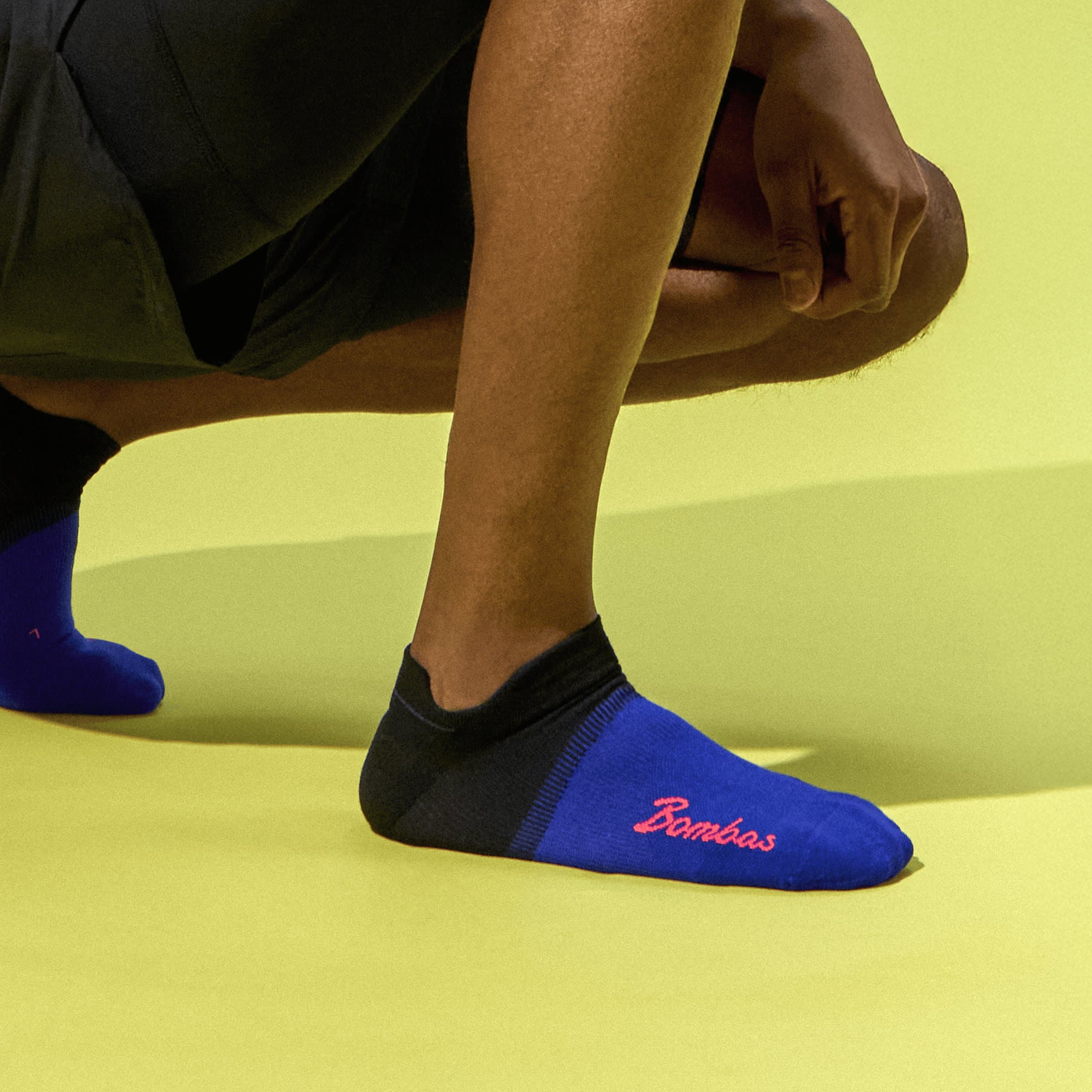
Bombas, distribution as a throughput problem.
Creator programs, multi-retailer shelf, and social commerce run as one motion.
Bombas product imagery, 2026
06 · INDUSTRY FOCUS
Health and Wellness
The agent-team opportunity in wellness is substantiated coherence at expansion speed: the category grows by crossing channels, every crossing multiplies the claims surface, and the brand that keeps its evidence discipline intact on every surface converts scrutiny into preference.
The 60-second read.
- The opportunity: hold the claims standard everywhere at once while the footprint grows. AG1 launched into more than 1,500 Ulta Beauty stores in May 2026, its first beauty-retail partnership, with the DTC subscription business running underneath.
- Replenishment is the economics. Wellness value concentrates in the second through tenth orders, which makes lifecycle coverage and timing the operating priority.
- Narrative stability is what makes launch cadence compound. Olipop's flavor and campaign tempo works because every campaign lands inside one stable functional story.
- Evidence discipline is a growth asset. Ritual's substantiation-led posture converts scrutiny into preference exactly as long as every page, send, and brief holds the standard.
The detail behind each of those lines follows.
Where the agent team lands in wellness
- 01
Email & Lifecycle with your claims built in
Campaign and flow drafts compose from your knowledge base, so approved language is the starting material. Every send still waits for your approval before it goes anywhere.
- 02
Email Flow Growth for the replenishment engine
The weekly read ranks welcome, replenishment, and win-back flows by revenue evidence and names the coverage gaps, so the second order stops depending on the shopper's memory.
- 03
Site Conversion with substantiation intact
The conversion brief ranks page moves that lift add-to-cart while keeping evidence framing exactly where the category needs it, including the product schema that AI shopping surfaces read.
- 04
Paid Media Intelligence against revenue of record
The monthly brief reconciles what ad platforms claim against what the store actually recorded, and hands you scale, hold, cut, and test moves you approve. Budgets never move on their own.
AG1's May 2026 launch into more than 1,500 Ulta Beauty stores, the company's first partnership with a beauty retailer, put the flagship greens product and the AGZ sleep line in front of a new audience while the DTC subscription business kept running underneath. Every surface added this way carries the same obligation: the claims, the routine framing, and the education have to match everywhere a shopper checks, because in this category a mismatch reads as a warning. Olipop and Ritual carry the same lesson from two directions: Olipop's launch cadence in functional beverage compounds because each flavor and campaign lands inside one narrative architecture, and Ritual publishes its evidence posture as a first-class part of the brand. In both cases the constraint on growth is the team-hours it takes to keep the standard while shipping every week, which is precisely the constraint an agent team removes.
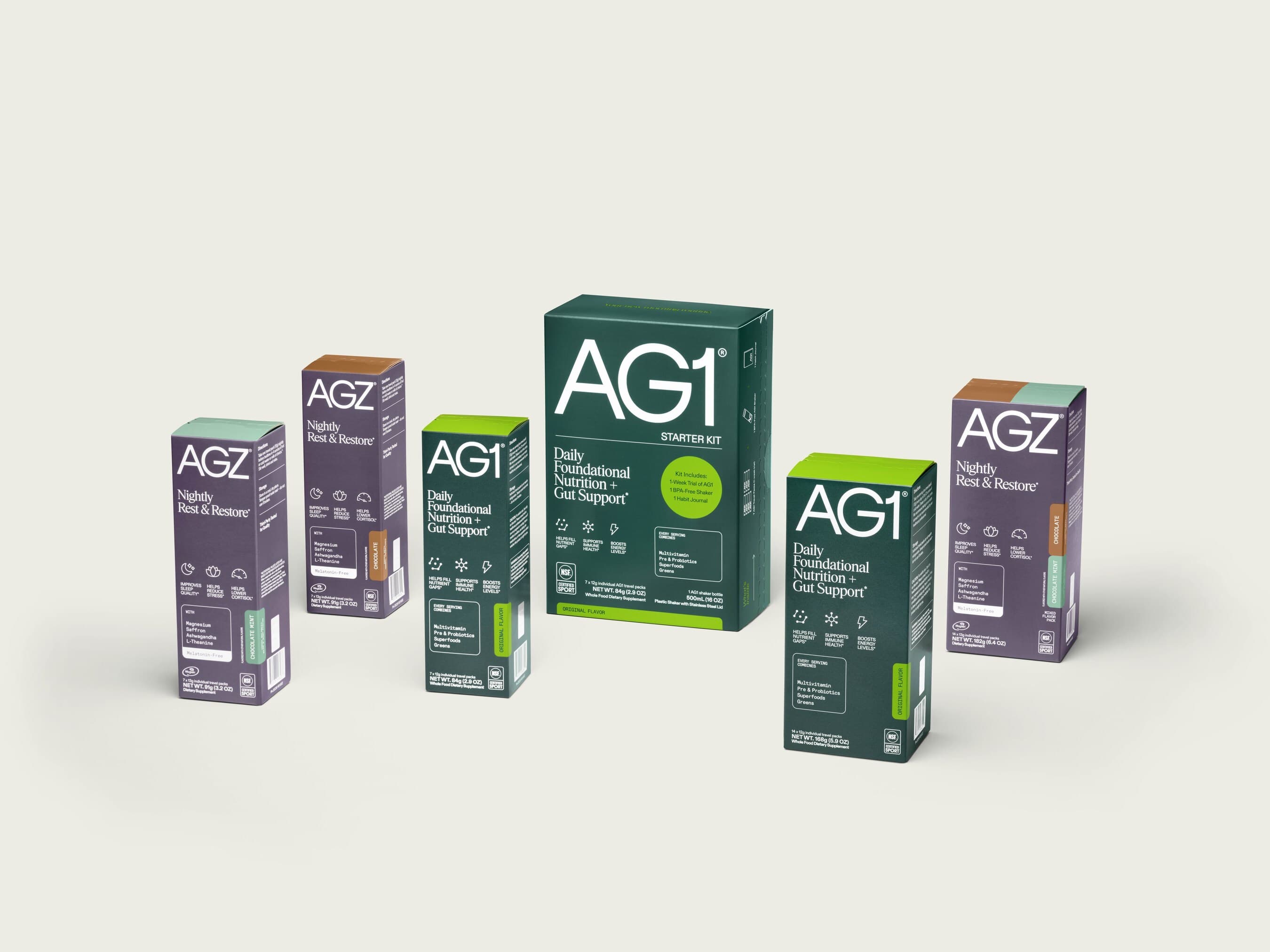
AG1, the channel-expansion moment.
First beauty-retail partnership, more than 1,500 Ulta stores, May 2026. The audience widens; the claims discipline must hold everywhere at once.
AG1 press release, May 2026

Ritual, evidence as brand.
Substantiation-led positioning converts scrutiny into preference, and it holds only if every surface keeps the standard.
Ritual PDP imagery, 2026

Olipop, functional positioning at campaign speed.
A frequent launch and flavor cadence compounds only when every campaign lands inside one stable narrative.
Olipop product imagery, 2026
07 · INDUSTRY FOCUS
Beauty
The agent-team opportunity in beauty is being findable and coherent inside the assistants first: this is the category where AI-mediated discovery is furthest along, the retailers have already moved, and the brands that keep their pages, launches, and creator surfaces agreeing with each other are the ones the new rails reward.
The 60-second read.
- The opportunity: meet a measured, compounding demand channel with agent-readable surfaces. NielsenIQ counts more than one billion beauty-related searches per week on ChatGPT; Tinuiti's April 2026 research finds over a third of beauty shoppers, and more than half of Gen Z, using AI to research or buy.
- The retailers moved first. Sephora launched its app in ChatGPT in March 2026; Ulta went live on Google's Universal Commerce Protocol in April 2026 and shipped its own Gemini-built assistant.
- Social commerce hit escape velocity. TikTok Shop generated $928.5 million in US beauty sales in the first quarter of 2026, up 96 percent year over year.
- Franchise coherence is the multiplier. Glossier's You Soie launch (March 2026, DTC plus Sephora) and Rare Beauty's hero-SKU franchise both depend on one story holding across every channel at once.
The detail behind each of those lines follows.
Where the agent team lands in beauty
- 01
Site Conversion for agent-readable pages
The conversion brief covers the craft AI surfaces reward: complete product schema, proof above the fold, ingredient and routine clarity a model can quote accurately to a shopper.
- 02
Merchandising at trend speed
Collection re-ranks keep hero SKUs, risers, and bundles surfaced as demand moves, so a TikTok spike meets a storefront already arranged to capture it.
- 03
New-Launch Copy for the franchise drop
Launch pages and listings drafted in the house voice from the catalog's own conventions, so a shade extension or scent-family launch lands as one story on every channel.
- 04
Paid Media Intelligence across creator-led spend
The monthly allocation brief reads platform claims against store revenue of record, so creator and paid budgets follow contribution rather than the platform's own scorecard.
The demand is measured and the rails are live. Sephora piloted its app inside ChatGPT in March 2026, connecting Beauty Insider accounts so recommendations draw on a shopper's actual history. Ulta Beauty followed in April with agentic commerce across Google's surfaces, powered by the Universal Commerce Protocol, plus Ulta AI, its own assistant built on Gemini and the behavior of 46 million loyalty members. The social rail is compounding just as fast: TikTok Shop's US beauty sales reached $928.5 million in the first quarter of 2026, up 96 percent year over year, on pace to clear $4 billion for the year.

Glossier, the franchise launch.
You Soie shipped March 2026 across DTC and Sephora, extending a signature scent family. A launch this coherent is an operating achievement as much as a creative one.
Glossier launch imagery, March 2026

Rare Beauty, the hero-SKU franchise.
One franchise carried across Sephora, DTC, and creator moments. The story must agree with itself on every surface a shopper meets.
Rare Beauty PDP imagery, 2026
For the brands, the operating implication is direct. Glossier's You Soie launch in March 2026 extended a signature fragrance family across DTC and Sephora in one coordinated motion. Rare Beauty's Soft Pinch franchise holds its position by keeping one product story consistent across retail, owned channels, and an enormous creator surface. Tower 28 turned a 28-shade relaunch of its hero concealer into a growth event by treating shade architecture, education, and channel timing as one problem. Each is the same capability wearing different packaging: coherent, current, well-merchandised execution everywhere the shopper looks, at a pace that outruns a small team's calendar.
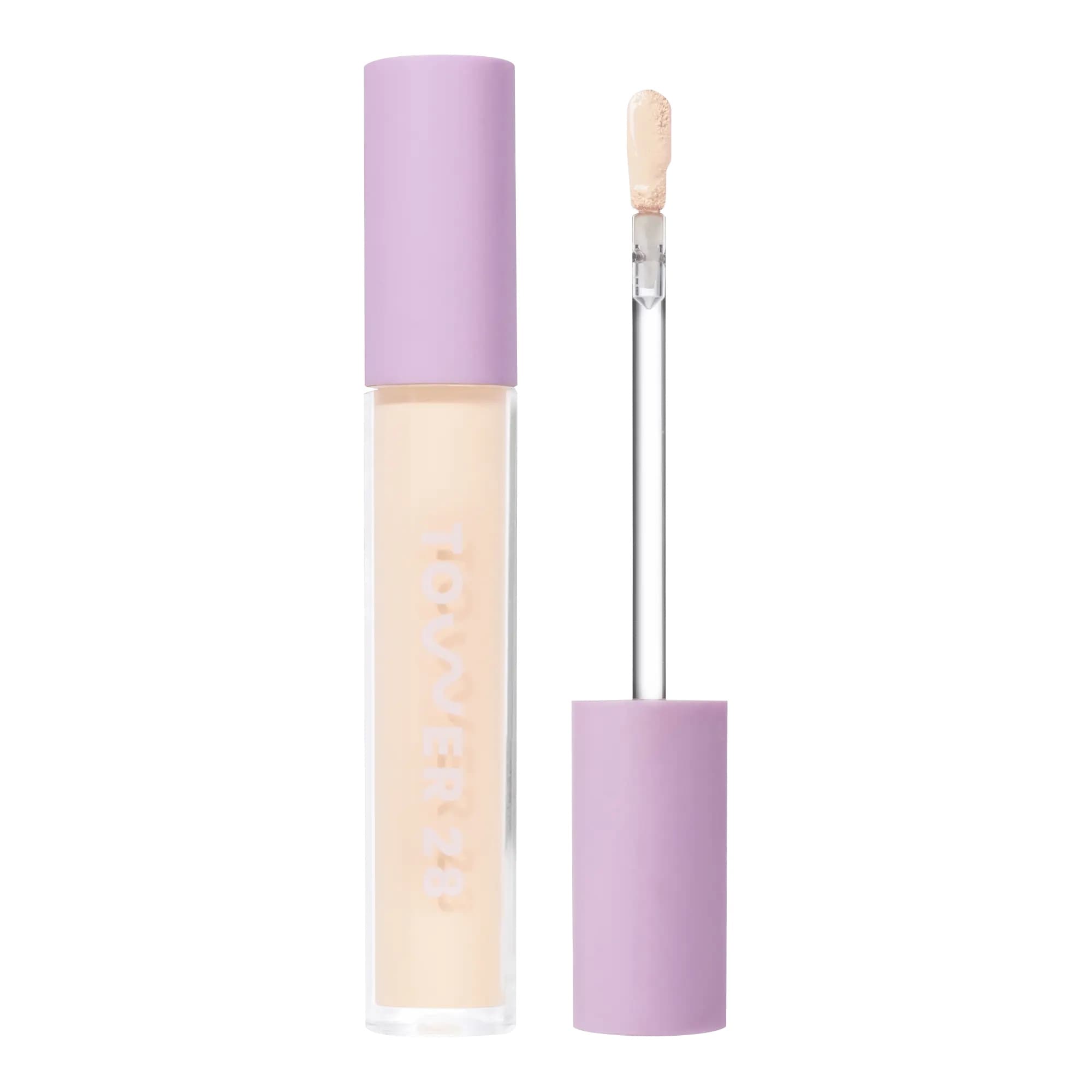
Tower 28, shade architecture as an operating event.
A 28-shade hero relaunch means dozens of pages, assets, and education moments that must land together.
Tower 28 PDP imagery, 2026
08 · THE ECONOMICS
What the Numbers Show
Read the economics in the order the value arrives: the growth outcome first, speed as the accelerant that compounds it, and cost as the structural fact that makes the cadence ordinary.
The 60-second read.
- The outcome leads. Category evidence puts the top product-page levers, stacked, near a 30 to 45 percent add-to-cart improvement; lift on your store is confirmed by owner-approved testing.
- Engagement models put revenue figures on the workflows. Canopy proposal work models one brand's lifecycle program to $335,000 of base-case year-one incremental revenue, with the working shown and the assumptions named.
- Time is the accelerant. A conversion audit that takes an agency one to four weeks lands from Canopy in about ten minutes, live-run median. The value of the speed is earlier capture, month after month.
- The cost structure supports the model. A single traditional audit runs $500 to $10,000 depending on provider; the same diagnose step on Canopy is a few dollars of included plan value, which is what makes a weekly cadence economically ordinary.
The detail behind each of those lines follows.
Brand leaders already know software is faster than headcount. The decision-grade question is whether the operating model produces growth a traditional pathway does not reach, and the evidence pattern says it does, for a structural reason: the disciplines that move revenue are cadence disciplines. A conversion brief captures more when it re-reads the store every month. A flow audit captures more when it re-ranks the program every week. Traditional economics price those as one-time projects; the agent team makes them a standing operating layer.
- The conversion advantage waiting for brands whose surfaces are ready, measured across more than one trillion US retail visits
- 54%
Adobe Analytics · May 2026 data
Start with the outcome evidence. On the storefront, the category research is consistent about where product-page conversion comes from: a rating and review summary above the fold is commonly cited in 2026 industry writeups around a 15 to 25 percent add-to-cart band, and the top levers stacked converge near 30 to 45 percent in proposal modeling. Those are category benchmarks; the discipline reads your real pages against the rubric, and the lift on your store is confirmed by owner-approved testing. On the lifecycle side, Canopy's proposal work models specific engagements to specific figures, for example one accessories brand's lifecycle and repeat-purchase program modeled to $335,000 of base-case year-one incremental revenue, with the working shown line by line. And the market side compounds both: Adobe's 53 percent revenue-per-visit advantage for AI-referred shoppers accrues to the brands whose pages those shoppers can actually read.
Measured add-to-cart lifts by lever, category benchmarks.
Each lever is a 2026 category benchmark. The Site Conversion brief reads your live pages against this rubric; lift on your store is confirmed by owner-approved testing.
Baymard, Yotpo, Littledata category research, 2026
Time is what turns those outcomes from annual events into a cadence. The comparisons below are same-layer comparisons, the diagnose step against the diagnose step, from Canopy's live run data as of July 2026.
| Diagnose step | Traditional pathway | Canopy |
|---|---|---|
| Conversion / PDP audit | $500 to $3,000 freelancer, $3,000 to $10,000 agency · 1 to 4 weeks | Ranked conversion brief in about 10 minutes, live-run median · monthly and on demand |
| Email program audit | $1,000 to $5,000 · 1 to 2 weeks | Ranked flow-growth brief in 5 to 10 minutes, live-run median · weekly and on demand |
| Cadence | One audit, then months until the next engagement | The read stays current as the catalog, program, and market change |
The diagnose step, traditional pathway versus Canopy, same layer
Published agency rate cards 2026 · Canopy live run data, July 2026
Cost is the supporting fact, and it matters for one structural reason: at a few dollars of included plan value per run, the weekly and monthly cadence is economically ordinary. What you are buying is an operating layer whose economics make continuous discipline rational, so the compounding outcome, the earlier capture, the flow rebuilt this month instead of next quarter, arrives as a matter of course.
09 · THE HORIZON
Where the Model Goes
Every current in the evidence runs the same direction: agents move from experiments to line items, single assistants become coordinated teams, and the brands that build the operating habit early carry a compounding advantage into the standard-agent era.
The 60-second read.
- Agentic AI becomes ambient in the software brands already run. Gartner expects a third of enterprise software applications to include agentic AI by 2028, up from under 1 percent in 2024, with 15 percent of day-to-day work decisions made autonomously.
- Spending shifts from assistants to outcomes. Gartner's April 2026 projection has more than half of enterprises moving spend from assistive AI to outcome-committed platforms by 2028, with people supervising agent output.
- Commerce surfaces are re-tooling for agents as buyers. In a March 2026 BigCommerce pulse of SMB and mid-market ecommerce leaders, 40 percent were standardizing product pages for agentic AI and none called their product data fully ready, an early, small-sample signal of a category-wide to-do list.
- The window is the 13 percent. With agentic adoption in marketing organizations still at 13 percent as of late 2025 fielding, the operating-model advantage is available now and priced like an early advantage.
The detail behind each of those lines follows.
The forecast picture is unusually aligned. Gartner has agentic AI inside a third of enterprise software by 2028 and expects the assistive-tool budget line to migrate toward platforms that commit to workflow outcomes, which is a forecast about accountability as much as technology: the buyer stops paying for suggestions and starts paying for finished, supervised work. BCG's CEO data shows the budget commitment already made at the top of the market, with the most committed cohort deploying agents end to end across whole workflows at twice the average rate. And the commerce-specific signal, early and small-sample as it is, points at the storefront itself: brands are beginning to prepare their product data for a shopper that is software, and almost none consider themselves ready.
For a growing brand, the practical reading of those curves is about sequence. The demand advantage documented in chapter one is live now, while the operating model that captures it sits at 13 percent adoption in marketing organizations. Moving early means the brand's knowledge base, outcome history, and approval rhythm are already deep when agent-mediated demand becomes the default, because an agent team compounds: every approved brief, every rejected draft, and every measured outcome makes the next cycle sharper. The brands that start that flywheel in 2026 will meet the standard-agent era with years of accumulated operating advantage, on rails they already trust.
10 · GETTING STARTED
The First Six Weeks
A constrained start creates control before scale: the objective of the first six weeks is one repeatable rhythm, signal read weekly, work drafted into the queue, decisions made by you, results visible.
| Week | What lands | Why it matters |
|---|---|---|
| 1 | Store and ESP connected; Brand Kit and knowledge base seeded | Every discipline drafts from your voice, claims, and conventions from day one |
| 2 | First Site Conversion and Email Flow Growth briefs in the review queue | The baseline read of your two biggest revenue surfaces, ranked |
| 3 | First lifecycle drafts and segment proposals for your approval | The repeat-purchase engine starts moving under human control |
| 4 | Catalog Hygiene read; storefront digest begins | The data-level defects capping merchandising get named and cleared |
| 5 | Paid Media Intelligence allocation brief; weekly digest rhythm established | Spend decisions get an evidence base reconciled to your revenue of record |
| 6 | The cadence review: what shipped, what moved, what scales next | The operating proof, and the basis for expanding scope with confidence |
A practical six-week start
Canopy onboarding model, July 2026
By week six the pattern is established: the disciplines read, draft, and wait; you decide. Expansion from there is a matter of scope, on the same rhythm the first six weeks proved.
11 · CONTROL
What Stays With You
Three commitments define the boundary, and each one is checkable in the product.
What stays with the brand. You keep owning and controlling the brand's assets and every decision of consequence: product and pricing, brand identity and creative direction, commercial relationships, media budgets, and final say on every artifact. The agent team takes the operating layer, the reading and ranking and drafting, never the assets or the judgment.
Augmenting your team and your tools. The agent team adds to what you run today. Your storefront stays your storefront, your ESP stays your ESP, and your team's time moves up the stack to the calls that need a human. The disciplines work inside the systems you already trust.
You approve everything.
Every discipline drafts. Nothing publishes, sends, or changes in your store without your approval.
The review queue is where all work waits, every draft passes a voice gate before you ever see it, and an audit brief is read-only by design: Paid Media Intelligence never moves a budget, Merchandising never re-ranks a collection on its own, and no email sends itself. Human control is the architecture.
This report is the strategy, and the way to test it is to see your own store read this way: your product pages ranked, your email program mapped, your catalog checked, your paid spend reconciled, all of it waiting in a queue for your decision. The 54 percent conversion advantage of AI-referred shoppers is the market's number; the version that matters is the one measured on your surfaces. Request access below and Canopy runs against your live store, with the first briefs landing the same week.
See your agents in action.
Enter your website URL. Canopy reads your brand, opens a workspace, and shows what the agents would build from your live site.